Furnace maintenance in Canada means one service a year by a licensed technician, ideally in the fall before the heating season. Ontario's TSSA tells homeowners to have every fuel-burning appliance inspected annually by a TSSA-registered contractor, and Technical Safety BC says to service all home heating devices annually, regardless of fuel type, to prevent fires and carbon monoxide poisoning.
Here is why that matters more than the furnace's age or brand. A furnace that has not been looked at in three years can still blow warm air every morning — right up to the January night it stops. And the failure that should worry you is not the one that leaves you cold. The dangerous failure is the one you cannot see or smell: a cracked heat exchanger or a blocked vent quietly pushing carbon monoxide into the house. An annual tune-up is not a nice-to-have. The annual tune-up is the one appointment a year where someone qualified actually looks.
• Once a year, by a licensed technician — TSSA (Ontario) and Technical Safety BC both say annually.
• Book it in the fall: NRCan says plan the heating check-up in the fall and the cooling check-up in the spring.
• In Ontario, use a TSSA-registered fuel contractor; in BC, a certified gas fitter working for a licensed gas contractor.
• Between visits, you own the filter, the vents and the CO alarms.
• Ask for the completed checklist — Technical Safety BC's own service list ends with leaving it with you.
How often should a furnace be serviced in Canada?
A furnace in Canada should be serviced every year. Ontario's Technical Standards and Safety Authority (TSSA) says to have all fuel-burning appliances inspected annually through the services of a TSSA-registered fuel contractor. Technical Safety BC says to have all home heating devices, regardless of fuel type, serviced annually to prevent fires and carbon monoxide poisoning.
Natural Resources Canada (NRCan) gives the timing: book annual pre-season check-ups, with the heating system check-up in the fall and cooling maintenance in the spring. For oil, NRCan is blunter still: oil-fired furnaces and boilers require annual cleaning and tuning.
The furnace is rarely the only appliance that needs the visit. The TSSA estimates that the average Ontario home has roughly 4 to 6 fuel-burning appliances that produce carbon monoxide — the furnace, the water heater, a gas fireplace, a stove, a dryer. Ask whether the technician will inspect all of them on the same call.
What does a furnace tune-up include in Canada?
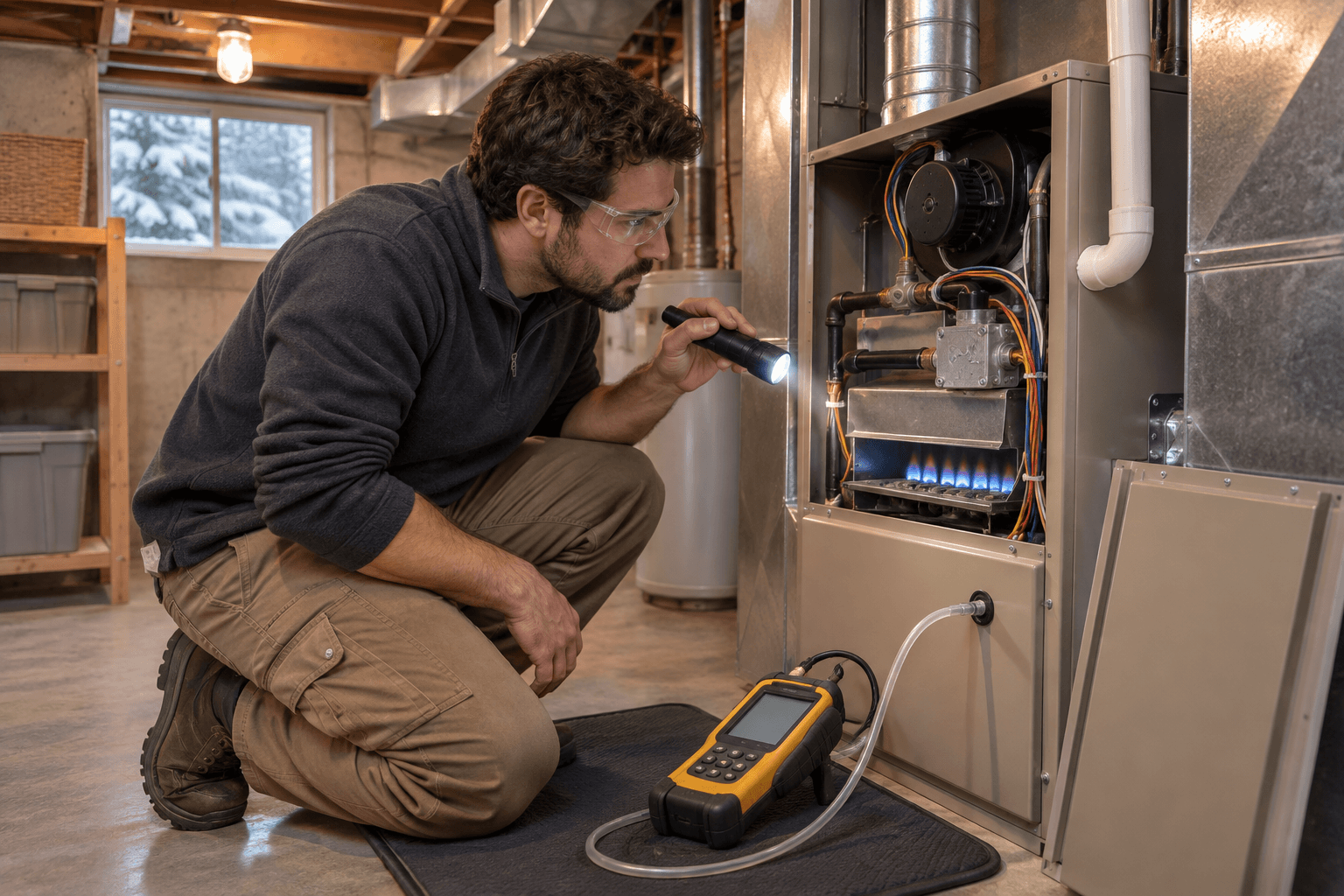
A proper furnace tune-up in Canada covers safety first and efficiency second. The checklist below combines Technical Safety BC's published gas furnace service list with NRCan's maintenance guidance, and it is the standard to hold any technician to.
Technical Safety BC's list ends with three lines that are easy to skip and worth insisting on: leave the completed checklist with the customer, and record the gas contractor's name and number and the gas fitter's name and number. A technician who will not write down what was checked has given you a visit, not a tune-up.
Who is allowed to service a furnace in Ontario and BC?
In Ontario, the TSSA says fuel-burning appliances should be inspected by a TSSA-registered fuel contractor. In British Columbia, Technical Safety BC says servicing and maintenance of gas appliances should only be carried out by a certified gas fitter employed by a licensed gas contractor. In both provinces, ask for the registration or licence number before anyone opens the furnace.
• Someone at the door offering a "free inspection" you did not book. Ontario restricts door-to-door selling of furnaces and related services.
• No licence or registration number when you ask for one.
• A replacement quote produced in the same visit as the diagnosis, with a deadline attached.
• "Cracked heat exchanger" with no photo and no offer to show you.
• No written checklist at the end of the visit.
What furnace maintenance can Canadian homeowners do themselves?
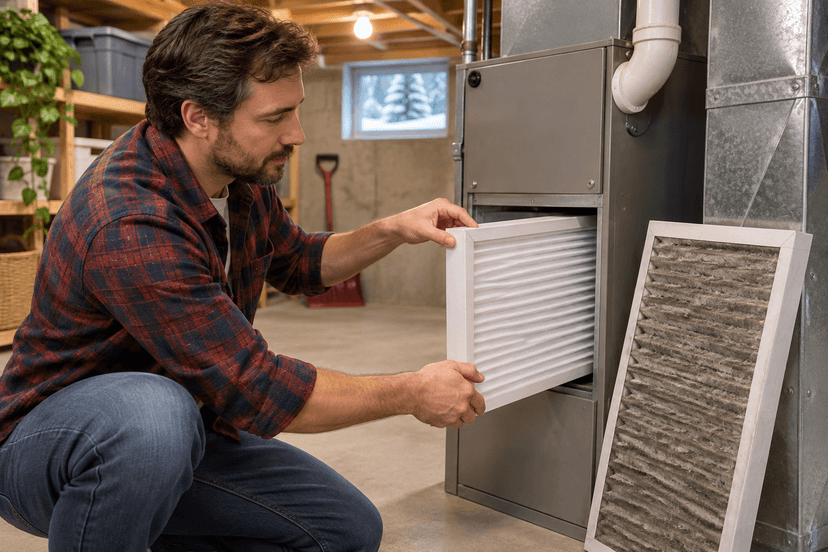
Canadian homeowners can handle the routine jobs between annual visits: the filter, the vents and the alarms. Everything that involves gas, burners, the heat exchanger or venting is a job for the licensed technician.
The table below lists the five furnace jobs a Canadian homeowner can do between annual visits, how often to do each, and which authority says so.
High-efficiency furnaces vent through plastic pipes in the side wall, so a single drift can block the exhaust. The Government of Ontario's carbon monoxide safety page says to ensure outside vents and chimneys for the dryer, furnace, stove, fireplace and other fuel-burning appliances are always clear of snow and debris. For the filter, hold it up to the light: if you cannot see through it, change it.
Is annual furnace maintenance worth the cost in Canada?
Annual furnace maintenance is worth it in Canada because the real cost of skipping it is not efficiency, it is safety. The TSSA reports that carbon monoxide continues to be a leading cause of accidental poisoning in Ontario, and that approximately 65% of all CO incidents happen at home. The annual inspection is the check designed to catch the faults behind those incidents.
We do not publish a furnace tune-up price. Every tune-up price published in Canada that we found comes from a company that sells tune-ups or service plans, and we do not repeat a seller's number as if it were neutral. The honest way to get the price for your home is to describe the furnace (gas or oil, age, high-efficiency or mid-efficiency) and the other fuel-burning appliances, then compare written quotes for the same checklist.
If the technician comes back recommending a repair, our guide to furnace repair cost in Canada covers what common repairs cost and how to use the $5,000 rule to decide between repair and replacement. If it points to replacement, the furnace replacement cost guide covers what comes next.
When should you book furnace maintenance in Canada?
Book furnace maintenance in Canada in September or October, before the first cold snap. NRCan recommends the heating check-up in the fall, and early booking means the technician has time to do the full checklist rather than squeezing you between no-heat emergency calls in December.
If you missed the fall window, book now anyway. A furnace that is already running hard in November is the one that most needs a look before January, and a mid-season tune-up is better than none.
• Are you TSSA-registered (Ontario) or a licensed gas contractor (BC)? What is the number?
• Will you inspect every fuel-burning appliance, not just the furnace?
• Do you check the heat exchanger and test for carbon monoxide on every visit?
• Will I get the completed checklist in writing?
• Is the price for the full checklist, with any extra charges listed up front?
Find a furnace technician without paying for the lead
The difference between a tune-up and a sales visit is who you let into the basement. Ask the five questions above, get the checklist in writing, and compare more than one quote.
TaskRight is a verified, zero-commission home services platform in Canada. Post your furnace maintenance job once — gas or oil, the furnace's age, and the other fuel-burning appliances you want checked — and compare quotes from local HVAC pros. Every pro on TaskRight is verified by our team over the phone before they can quote. They keep 100% of every job and pay no per-lead fee, so no lead cost is built into your tune-up price.
👉 Book your furnace tune-up with a local pro →
Furnace maintenance in Canada: frequently asked questions
How often should a furnace be serviced in Canada?
A furnace in Canada should be serviced once a year. Ontario's TSSA says to have all fuel-burning appliances inspected annually by a TSSA-registered fuel contractor, and Technical Safety BC says to service all home heating devices annually, regardless of fuel type. NRCan recommends booking the heating check-up in the fall, before winter.
What is included in a furnace tune-up?
A furnace tune-up in Canada should include a heat exchanger inspection, a carbon monoxide check, a venting system inspection, burner cleaning, a gas pressure check, safety control tests, blower cleaning, a thermostat check and filter maintenance. Technical Safety BC's service list ends with leaving the completed checklist with the homeowner.
Can I service my own furnace?
Canadian homeowners can change the filter, keep registers and outside vents clear of snow, test carbon monoxide alarms and look at the chimney through the base cleanout. Work on gas, burners, the heat exchanger or venting belongs to a TSSA-registered contractor in Ontario or a licensed gas contractor's certified gas fitter in BC.
Who can service a gas furnace in Ontario?
The TSSA says fuel-burning appliances in Ontario, including gas furnaces, should be inspected annually through a TSSA-registered fuel contractor. Ask for the contractor's registration number before work starts, and be wary of anyone offering an unbooked inspection at the door, because Ontario restricts door-to-door furnace selling.
How much does furnace maintenance cost in Canada?
TaskRight does not publish a furnace maintenance price, because every Canadian tune-up price we found comes from a company selling tune-ups or service plans. The reliable price for your home comes from comparing written quotes for the same checklist, with the furnace type, its age and every fuel-burning appliance listed.
Is annual furnace maintenance necessary?
Annual furnace maintenance is necessary in Canada for safety. The TSSA reports that carbon monoxide continues to be a leading cause of accidental poisoning in Ontario, with approximately 65% of CO incidents happening at home. The yearly inspection checks the heat exchanger, venting and CO levels behind those incidents.
Last updated: November 2026. Sources: TSSA news release of 3 November 2025; Technical Safety BC information bulletin on annual servicing of gas appliances; Natural Resources Canada guidance on maintaining home heating and cooling systems (modified 10 June 2025) and on residential furnaces (modified 19 March 2025); Government of Ontario guidance on door-to-door sales (updated 19 June 2026); Government of Ontario carbon monoxide safety guidance (updated 30 December 2025). We re-check these sources every six months.
Related reading:
Furnace Repair Cost in Canada — what repairs cost and the $5,000 rule.
How Often to Change a Furnace Filter — the one job you own between tune-ups.
HVAC contractors in Toronto — zero commission.