Canadian home inspection companies publish $300 to $800 for a standard house, and square footage sets where you land. One Vancouver-area firm's own fee schedule runs $575 under 1,500 square feet and $1,895 at 7,001 to 8,000 square feet, all inside one price list.
Here is what makes this the worst line item to guess at in the whole buying process. You are already committed emotionally, the offer is conditional, you have days rather than weeks, and the number you have in your head came from a national range written for a house that is not yours. So you book the cheapest quote on the phone, and nobody on that call asked how big the house is. In Winnipeg the $500 flat fee is for a single-family dwelling up to 1,800 square feet. In Victoria the $629 starting price is for a single-family home under 2,500 square feet. In the Vancouver area one company publishes eight separate size bands for a single-family home. A quote given on the phone is a quote for whatever size the person on the other end assumed. An inspection is the one purchase in this transaction where the cheapest quote can be the expensive decision. An Ottawa inspection company sets its own $450 to $600 fee beside a foundation repair it prices at $10,000 to $50,000 or more, and nothing in the fee itself tells you which of those you bought.
• A standard Canadian house inspection is published at $300 – $800, depending on who is quoting and where.
• Size is the biggest single driver. One Vancouver-area schedule climbs from $575 under 1,500 sq ft to $1,895 at 7,001 to 8,000 sq ft.
• A condo costs less than a house on every price list on this page that separates them: $450 under 1,000 sq ft in the Vancouver area, $350 – $450 in Ottawa, $250 – $400 from an Ontario brokerage, and $250 in Edmonton.
• Age is priced too. One schedule adds $150 for a home built before 1950 and $100 per suite.
• Add-ons move the bill fast: WETT $150 – $250, radon or air quality $100 – $300, thermal imaging $100 – $200.
• Ask for the fee for your square footage, not the range. A quote given before anyone asks the size of the house is a quote for someone else's house.
• In British Columbia, Consumer Protection BC states that home inspectors must be licensed with it. Check the licence before you book.
How much does a home inspection cost in Canada?
The table below shows what eight Canadian publishers charge or report for a residential inspection, in Canadian dollars, with the scope recorded as published. Read the scope column before comparing any two rows, because a flat fee for one house size is not the same object as a national range.
Notice who publishes the two $300 floors. Both come from a national data site and a brokerage summarising the market rather than from anyone who will show up at the house. The two rows that publish a single figure instead of a range, $629 in Victoria and $500 in Winnipeg, are both inspection companies quoting their own work, and both attach that figure to a size: under 2,500 sq ft in Victoria, up to 1,800 sq ft in Winnipeg. A number written by someone who is not going to show up at the house is an average. A number written by someone who is going to show up is a price, and prices in this trade are attached to a square-footage band.
How much does a home inspection cost by house size in Canada?
One Vancouver-area inspection company publishes its whole fee schedule by square footage for the Greater Vancouver area. Its townhouse schedule stops at 4,000 square feet while its house schedule keeps going to 8,000.
Two things in that ladder are worth carrying into your own quote. The first is where the curve bends: the fee climbs gently from $575 to $875 across the first five bands, then jumps to $1,225 in the next one. A house that crosses 5,000 square feet stops being a bigger version of the same job and starts being a longer one. The second is that a national average of $300 to $800 answers a question about a house under about 2,000 square feet, and answers nothing at all about a 5,500 square foot one.
The Vancouver-area company's own schedule labels consecutive bands 5,001 to 6,000 and 6,000 to 7,000 square feet, so a house of exactly 6,000 square feet sits on the boundary between two prices. Ask which band it puts you in before you agree a fee.
Consumer Protection BC states that in British Columbia home inspectors must be licensed with it and are required to follow certain laws, and that a licensed home inspector must meet certain education and training requirements, be insured and complete a criminal record check. Alberta.ca lists a Home inspection business licence and a separate Home inspector licence among its business licences. Neither authority above speaks for any province other than its own. Before booking, ask your inspector what licence, registration or association membership they hold, and check it with the consumer-protection authority in your own province.
How much does a condo inspection cost in Canada?
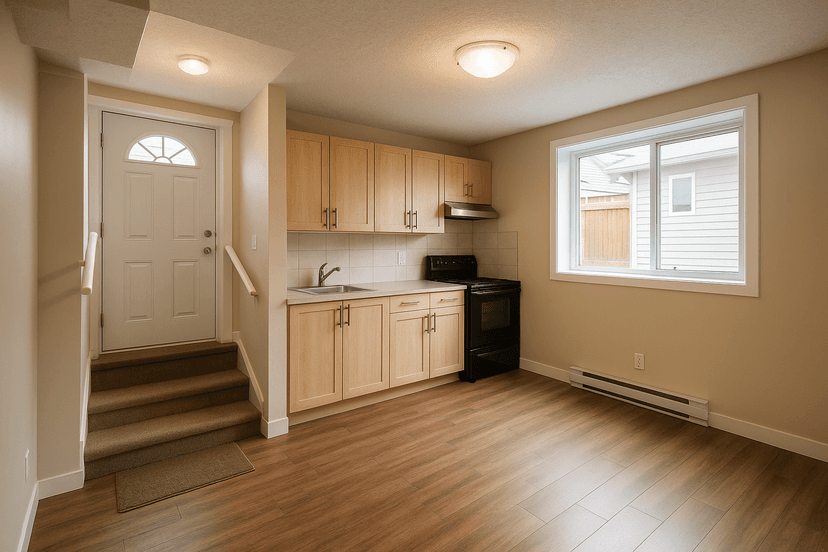
A condo is cheaper to inspect than a house on every Canadian price list on this page that prices the two separately. An Ottawa inspection company gives the reason on its own page: condos are generally less expensive than detached homes because the scope is limited to the unit's interior systems. A Vancouver-area company states it goes further than that, inspecting accessible common and restricted areas such as the roof, mechanical rooms and underground parking when permitted, so ask what the condo fee actually covers. The Vancouver-area company publishes a full condo ladder by square footage, and its condo bands start at a different size from its house bands.
Elsewhere in Canada the condo discount is published as a flat range rather than a ladder. An Ottawa inspection company puts a condo or small apartment at $350 to $450 against $450 to $550 for a single-family home up to 2,000 square feet. An Edmonton company publishes $250 for a small condo or apartment against $500 to $600 for most houses. An Ontario brokerage publishes $250 to $400 for a condo against $300 to $600 for a standard home.
One warning that the Vancouver-area company states on its own page and that a condo buyer should read twice: a home inspection does not include reviewing the strata documents. A depreciation report tells a strata corporation what common property it has and what the future repair costs look like, and reviewing it sits outside the scope of a visual inspection. Budget for that review separately or you have priced half the purchase.
What add-ons increase a Canadian home inspection quote?
The base fee buys a visual inspection of the house. The eight items below are published separately by Canadian inspection companies, and several of them are requested by an insurer or a lender rather than chosen by you.
1. WETT inspection for a wood stove, fireplace or insert: $150 – $250 bundled with a general inspection (Ottawa), and $150 – $250 in the Okanagan, where the page states insurers often require it.
2. Radon or indoor air quality survey: $100 – $300 (Calgary).
3. Mould and air quality sampling: $200 – $400 depending on the number of samples (Ottawa).
4. Thermal imaging: $100 – $200 added to a standard inspection (Ottawa), or $60 as an add-on scan plus $25 for each image included in the report (Winnipeg).
5. A home built before 1950: add $150 (Vancouver area).
6. Secondary suites: add $100 per suite, or $450 for a laneway home or coach house (Vancouver area).
7. Pool or hot tub: $200 – $500 depending on the testing required (Okanagan).
8. Travel beyond the service area: the Vancouver-area company charges ferry costs plus $250 for travel time to the Gulf Islands, and asks you to call for pricing outside Greater Vancouver.
The pre-1950 surcharge is the sleeper. The age of a house is not a soft factor that an inspector mentions in the report, it is a line on the fee schedule, and the Vancouver-area company states that its posted fees are subject to change based on age and location. Two more numbers worth knowing before you sign anything: the same company charges $250 plus GST for a cancellation without 48 hours' notice, and an Ottawa company prices a commercial property inspection at $800 to $2,500 or more, which is a different service from anything else on this page.
How long does a home inspection take in Canada?
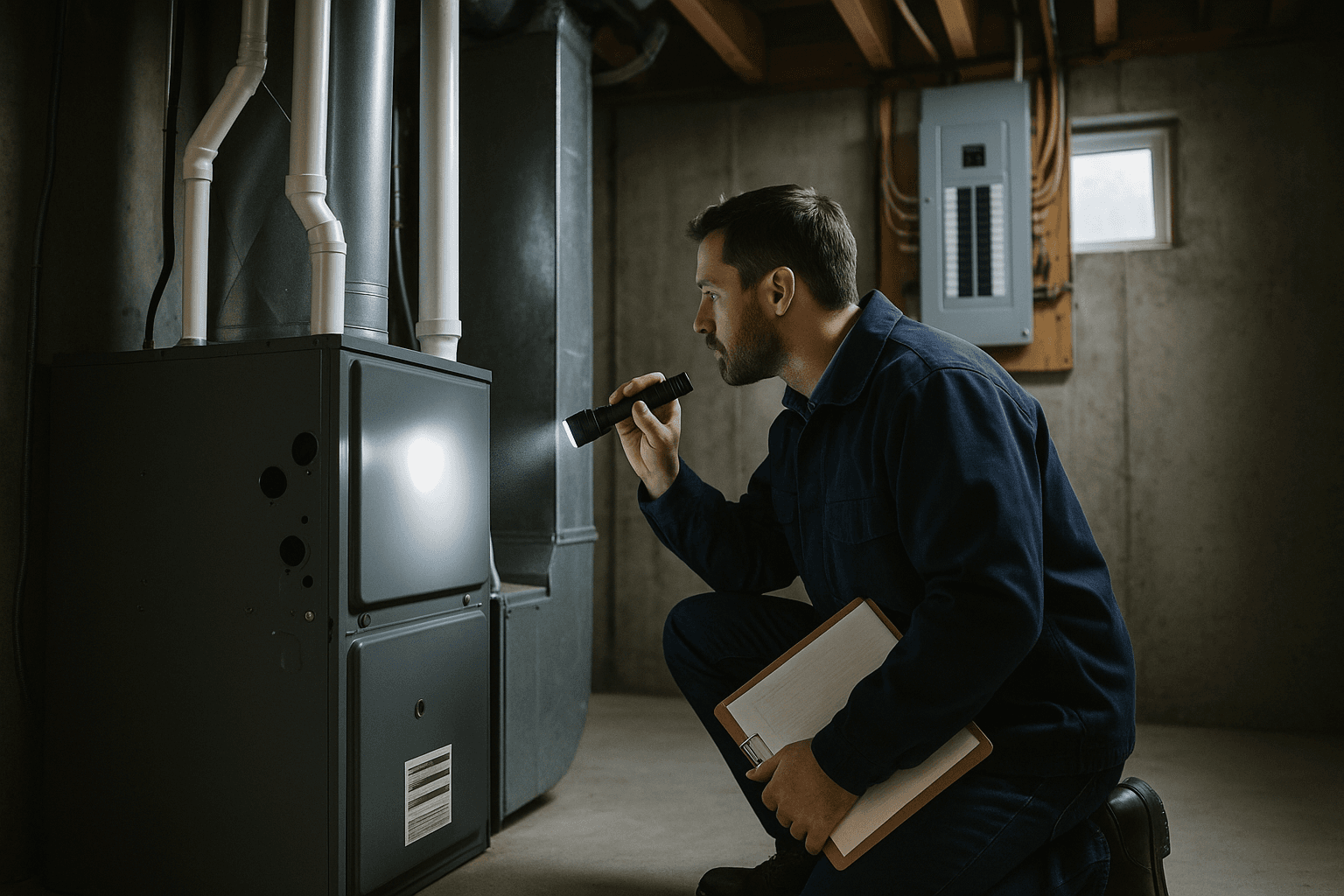
A national real-estate data site states that a typical Canadian home inspection takes approximately 3 to 5 hours. A Winnipeg inspection company states that its own pre-purchase inspection typically takes 2 to 3 hours and comes with a report and a home reference book. Both numbers are useful because duration is the honest proxy for scope: an inspector who quotes you 90 minutes on a 2,500 square foot house is quoting a different job from the one on that Vancouver-area fee schedule.
Attend it if you can. The national data site advises that the buyer and their agent attend, on the grounds that walking the house with the inspector is the best way to understand what you are buying, and it warns buyers to be cautious of a report commissioned and paid for by the seller.
What do Canadian home inspections most commonly find?
A Canadian real-estate data site publishes five common inspection findings with the share of inspections each appears in and an average repair price for each, crediting the repair-pricing service Repair Pricer. Read the two columns together, because frequency and cost do not rank in the same order.
The five rows do not rank in the same order on the two columns. Missing GFCI protection appears in 48.0% of inspections and carries a $546 average repair price against $313 to $391 for the other four rows. Doors needing adjustment appear in 54.9% of inspections at an average of $329. Neither finding is a deal-breaker on its own. The reason an inspection pays for itself sits one level up, in the items the same data site prices separately: a foundation issue costs an average of $2,700 to fix in Canada, and electrical repairs average $1,000 depending on the size of the system. Against a $575 fee, catching one of those once is the whole return.
How do you find a home inspector in Canada without paying lead fees?
Before you compare a single quote, understand how lead-selling directories make their money. The directory charges the inspector for your enquiry, and the same enquiry can be sold to more than one company at a time. Nothing about that is illegal. Lead-selling is a model in which the inspector's customer is the platform, not you, and money spent buying your details before anyone says hello has to come back out of something. The cost of buying your details comes back out of your quote, or out of the hours spent in your basement.
TaskRight runs the opposite model. Pros pay one flat subscription and TaskRight takes 0% commission, so the inspector keeps 100% of what you pay for the job. No per-lead fees, so nobody buys your request and nobody resells it to a queue of companies who all phone you during a conditional period you cannot extend. You give the property type, the square footage and the year built once, and every inspector who quotes has the size of the house in front of them before they name a number. Free to you, no contract, no obligation to hire anyone.
TaskRight is a verified, zero-commission home services platform in Canada. Post the inspection once with the size, the age and whether there is a wood stove or a suite, and get quotes that already include the add-ons instead of quotes that discover them on the day.
👉 Get home inspection quotes in Canada →
Home inspection cost in Canada: frequently asked questions
How much does a home inspection typically cost in Canada?
Canadian inspection companies publish $300 to $800 for a standard house. A national real-estate data site reports $300 to $500, an Ontario brokerage $300 to $600, a Calgary company $400 to $600, an Edmonton company $500 to $600 for most homes, and an Okanagan company $400 to $800, which states costs can exceed $1,000 on larger properties.
How much does a home inspection cost for a 2,000 square foot house in Canada?
A Vancouver-area company posts $625 for a duplex or single-family home of 1,501 to 2,000 square feet. An Ottawa company publishes $450 to $550 for a single-family home up to 2,000 square feet. Add-ons such as a WETT inspection at $150 to $250 sit on top of both figures.
What is the biggest red flag in a home inspection?
A Canadian real-estate data site publishes an average foundation fix at $2,700 in Canada and average electrical repairs at $1,000. Among the five common findings the same site lists, missing GFCI protection carries a $546 average repair price against $313 to $391 for the other four, and appears in 48.0% of Canadian inspections.
What are the most common home inspection fails?
A Canadian real-estate data site lists doors needing fixing in 54.9% of inspections at an average of $329, faucets needing servicing in 54.8% at $344, worn exterior caulking in 54.5% at $391, outlet or switch deficiencies in 53.7% at $313, and no GFCI protection in 48.0% at $546.
Who pays for the home inspection in Canada?
The buyer typically pays, according to a national Canadian real-estate data site. The same site notes that sellers occasionally commission their own assessment early in negotiations, and advises buyers to treat a report paid for by the seller with caution and to choose their own inspector instead.
Last updated: August 2026. Canadian home inspection prices are checked against published sources every six months.
Related reading:
Home inspectors in Canada — compare verified inspectors with no lead fees.
Basement and foundation pros in Canada — for the finding that costs the most to fix.
Basement waterproofing cost in Canada — what a wet basement finding turns into.