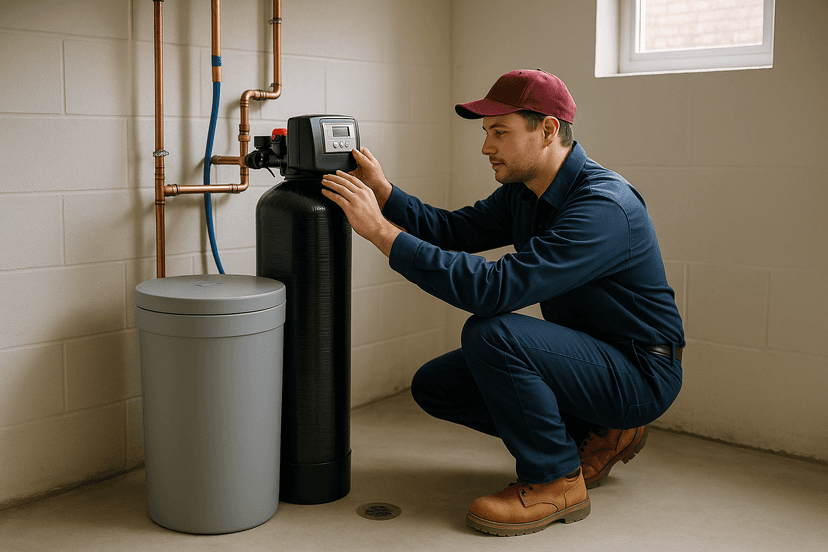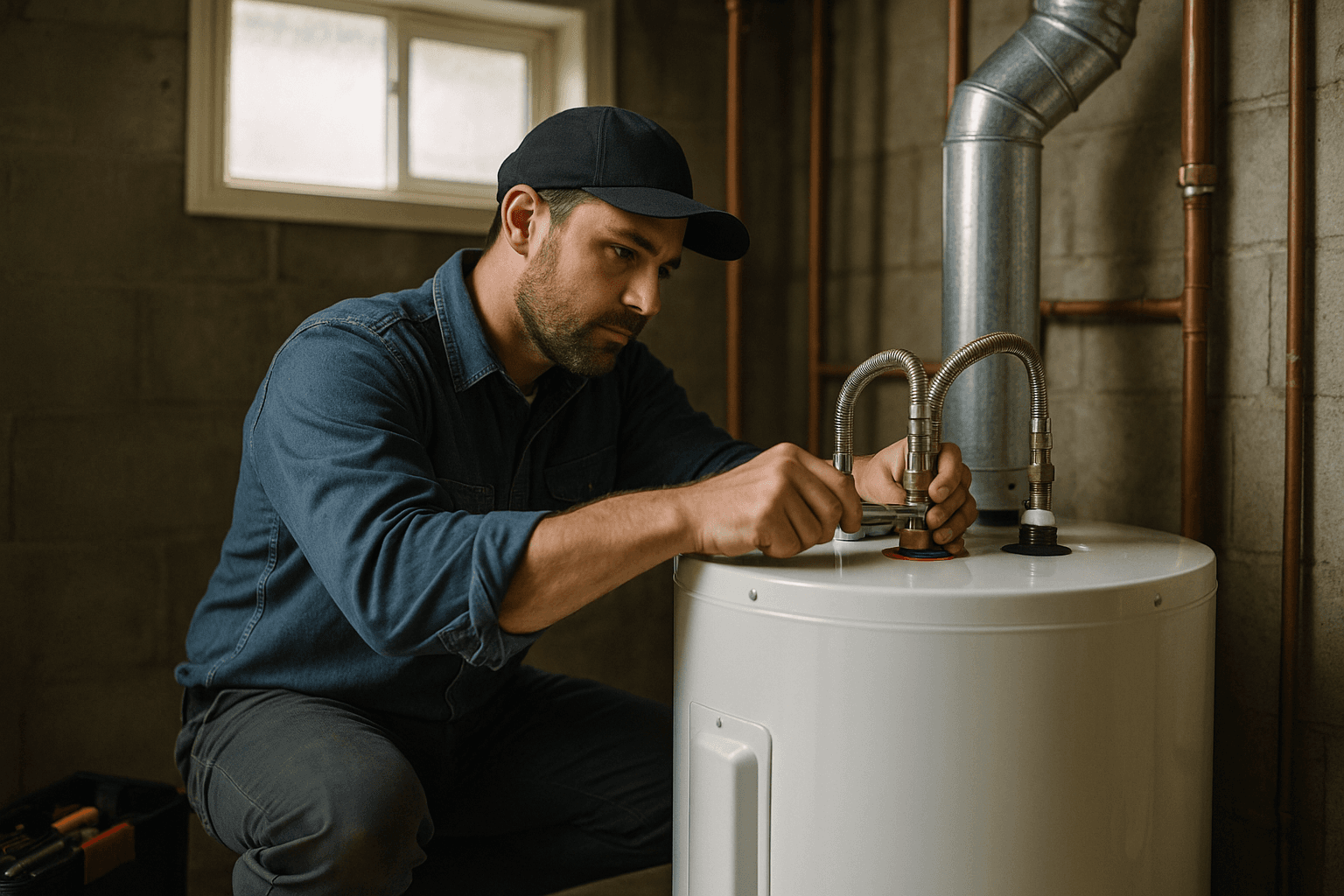
Replacing an existing electric hot water tank in Vancouver needs no permit, according to the City of Vancouver’s own permit guidance. Replacing a gas water heater does need a gas permit, issued by Technical Safety BC. The fuel your tank runs on decides the answer, not the size of the job.
Last updated: September 2026
Your tank has failed, there is water across the basement floor, and the first three plumbers you call all say something different about permits. One of them is quoting you for paperwork you do not need. Another is about to do gas work with no permit at all and leave you holding a penalty that Vancouver charges to the homeowner, not the contractor. Ninety seconds of reading settles which is which.
Which hot water tank replacements need a permit in Vancouver?
The table below splits the two cases using the City of Vancouver’s published permit guidance and Technical Safety BC’s homeowner gas permit rules.
The dividing line is fuel and scope, not price. A straight electric swap sits in Vancouver’s no-permit list; the moment gas is involved, or a line moves, the job changes category.
Why do Vancouver plumbing pages disagree about this?
Search the question and several Vancouver plumbing sites state that replacing a water heater typically requires a building permit. The City of Vancouver’s own page says the opposite for the electric case, listing ‘replacing an existing electric powered hot water tank’ among projects that do not require a permit. Where a contractor’s blog and the issuing authority disagree, the authority decides.
Who issues a gas permit for a Vancouver water heater?
Technical Safety BC is the provincial authority for gas permits in British Columbia, and states that depending on where the property is located, either Technical Safety BC or the municipality issues the permit. A Vancouver homeowner should confirm which body has jurisdiction over their address before applying, because applying to the wrong one wastes the time the tank does not have.
Can a Vancouver homeowner pull their own gas permit?
Technical Safety BC allows homeowners to apply for a gas permit directly, and excludes three groups explicitly:
- Owners of a strata.
- Owners of a non-strata duplex.
- Anyone operating a business from their home.
A Vancouver homeowner in any of those categories must hire a licensed contractor, who applies for the permit on their behalf. Technical Safety BC also publishes a permit lookup tool, so a Vancouver homeowner can check that a contractor’s permit genuinely exists rather than taking it on trust.
What happens if you replace a Vancouver hot water tank without a permit?
The City of Vancouver publishes the consequences of working without a required permit, and the financial one lands on the homeowner:
- A work-without-permit penalty, typically double the original permit fee.
- A delay while the application is processed, during which all work must stop.
- Potential removal of work already carried out before the permit was obtained.
- Potential for more work than budgeted, such as adding fire sprinklers or making seismic upgrades.
How long does a Technical Safety BC homeowner gas permit last?
Technical Safety BC requires at least one inspection to be requested within 180 days of the date the permit was issued. A Vancouver gas water heater job that finishes in an afternoon should have its inspection requested in the same week, not parked until the deadline approaches.
Which other Vancouver home jobs need no permit?
The City of Vancouver publishes a list of small projects and repairs that do not require a permit, which is useful context when a Vancouver tradesperson quotes permit fees on routine work:
- Replacing fixtures, cabinets or flooring.
- Non-structural maintenance and minor repairs to the exterior of the home.
- Painting.
- Unclogging drains.
- Replacing an existing electric powered hot water tank.
- Replacing defective fuses, receptacles or switches.
- Installing roofing, gutters or drain-pipes.
One more Vancouver number worth knowing: withdrawing a permit application can attract a partial refund where the applicable by-law allows, and the City charges a $97 administration fee to process the refund request.
What should you ask a Vancouver plumber before booking?
Four questions separate a Vancouver plumber who works to the rules from one who is guessing. Ask them before the truck is dispatched, not after the old tank is out.
- Is my replacement electric or gas, and which permit does that make necessary?
- If a gas permit is needed, are you pulling it, and what is the permit number?
- Are permit fees inside your quote or added afterwards?
- Who requests the inspection, and when?
TaskRight is a verified, zero-commission home services platform in Canada — providers keep 100% of every job, so the quote you get is the price of the work, not the price of the work plus a platform’s cut.
Describe the tank job once and compare Vancouver plumbers who quote against the permit the work actually needs, with no lead fees and no commission taken out of the tradesperson’s price.
👉 Compare verified Vancouver plumbers →
Frequently asked questions about hot water tank permits in Vancouver
Do you need a permit to replace a hot water tank in Vancouver?
For an electric tank, no. The City of Vancouver lists replacing an existing electric powered hot water tank among projects that do not require a permit. A gas water heater is different: Technical Safety BC requires a gas permit to install or replace any gas appliance, including a water heater, in British Columbia.
Who issues a gas permit for a water heater in Vancouver?
Technical Safety BC issues homeowner gas permits in British Columbia, though the authority depends on location. Technical Safety BC states that either it or your municipality issues the permit depending on where the property sits, so a Vancouver homeowner should confirm jurisdiction before applying rather than assuming.
Can a Vancouver homeowner pull their own gas permit?
Sometimes. Technical Safety BC allows homeowners to apply for a gas permit directly, but excludes owners of a strata, owners of a non-strata duplex, and anyone operating a business from their home. A Vancouver homeowner in any of those three categories must hire a licensed contractor, who then applies on their behalf.
What happens if you replace a Vancouver hot water tank without a permit?
The City of Vancouver applies a work-without-permit penalty that is typically double the original permit fee, and all work must stop while the application is processed. Vancouver also states that the homeowner pays those fees personally, even where a contractor assured them no permit was needed.
How long does a Technical Safety BC homeowner gas permit stay valid?
Technical Safety BC requires at least one inspection to be requested within 180 days of the date the permit was issued. A Vancouver homeowner who pulls a gas permit and then lets the job drift past that window risks an unpermitted installation, so book the inspection as the work completes rather than afterwards.
Which other Vancouver home jobs need no permit?
The City of Vancouver lists replacing fixtures, cabinets or flooring, painting, unclogging drains, non-structural maintenance and minor exterior repairs, replacing defective fuses, receptacles or switches, and installing roofing, gutters or drain-pipes among the projects that do not require a permit in Vancouver. Anything that moves a plumbing, electrical or gas line falls outside that list.
Electric or gas decides it — and Vancouver bills the homeowner
A Vancouver plumber quoting permit fees on a like-for-like electric swap is charging for paperwork the City does not require. A Vancouver plumber doing gas work with no permit is leaving you exposed to a penalty at double the fee. Ask which one your job is, get the answer in writing, then compare quotes that all assume the same rules.
Related reading:
Sources and methodology
Every permit rule, fee and timeline on this page was read directly from the issuing authority’s own published page in September 2026. Fees shown are the authority’s published permit fees, not contractor pricing.