Since January 1, 2026, Ontario's carbon monoxide detector law, set in the Fire Code, requires an alarm on every storey of an existing home and one adjacent to each sleeping area, if the home has a fuel-burning appliance, a fireplace or an attached garage. The homeowner is responsible in an owner-occupied home, and the landlord in a rental.
Before 2026, Ontario's rule asked for one alarm adjacent to the sleeping areas, and that was it. The basement with the furnace in it, the main floor beside the attached garage, the family room with the gas fireplace often have nothing. Basements and main floors are exactly the storeys the 2026 rule now covers, because those are the floors where the furnace, fireplace and garage sit. The Ontario government describes carbon monoxide as "an invisible, odourless, and deadly gas". You will not smell it. The only warning you get is the one you installed.
• Applies to existing homes with a fuel-burning appliance, a fireplace or an attached garage.
• Also applies, from January 1, 2026, where heating air comes from a fuel-burning appliance outside the home, such as one in a utility shed.
• Required locations: adjacent to each sleeping area and on every storey, including storeys without bedrooms.
• Hardwired, battery-operated and plug-in alarms are all permitted. Look for a CSA, ULC or Intertek (ETL) mark.
• Owner-occupied: the homeowner complies. Rental: the landlord complies.
• Ontario law forbids anyone to remove the batteries or tamper with a CO alarm.
What is the carbon monoxide alarm law in Ontario?
Ontario's carbon monoxide alarm law sits in Section 2.16 of Division B of the Ontario Fire Code, Ontario Regulation 213/07. The Office of the Fire Marshal's fact sheet for existing homes summarises the change that took effect on January 1, 2026: new requirements "expand where CO alarms must be placed in existing homes."
Before 2026, the rule centred on alarms near sleeping areas. The 2026 update adds a second location, every storey of the home, so a basement or main floor with no bedrooms is no longer exempt. Your local fire department enforces the Fire Code and is the authority to call with questions about a specific home.
Which Ontario homes need carbon monoxide alarms?
An existing Ontario home needs carbon monoxide alarms if it has any one of the four conditions in the table below, taken from the Ontario government's fact sheet.
The fact sheet names detached and semi-detached houses, townhouses and cottages as common types of homes covered. An all-electric home with no fireplace and no attached garage falls outside these conditions, but a single gas water heater or an attached garage brings it inside them.
Where do you put carbon monoxide detectors in an Ontario home?
Ontario homes covered by the Fire Code need carbon monoxide alarms in two kinds of location. The Office of the Fire Marshal lists them as:
- Adjacent to each sleeping area, meaning near all bedrooms.
- On every storey of the home, including storeys that do not have a sleeping area. The every-storey requirement has applied since January 1, 2026.
For the exact mounting height and position on the wall or ceiling, the Ontario guidance is to follow the manufacturer's instructions for installation and placement. Placement rules differ between models, so read the leaflet in the box before you drill.
How many carbon monoxide alarms does an Ontario home need?
An Ontario home needs at least one carbon monoxide alarm per storey, and one adjacent to each sleeping area (a single hallway alarm can count for both). The Fire Code sets locations rather than a fixed count, so the number depends on the layout.
Two layouts show how the rule plays out. In a house where all bedrooms open off one upstairs hallway, a single alarm in that hallway can cover both the sleeping area and the upstairs storey, and the main floor and basement each need their own. In a house with a basement bedroom and upstairs bedrooms, each sleeping area needs an alarm adjacent to it, on top of the alarm required on the main floor. When a layout is unclear, the local fire department makes the call.
Who is responsible for carbon monoxide alarms in an Ontario rental?
In an Ontario rental home, the landlord is responsible for complying with the carbon monoxide alarm requirements in the Fire Code. In an owner-occupied home, the homeowner is responsible. Ontario also makes it illegal for anyone to remove the batteries or tamper with a carbon monoxide alarm, which applies to tenants as much as owners.
The Ontario government's carbon monoxide guidance spells out the landlord's duties in rental suites: install and maintain the alarms, test them annually, when the battery is replaced, when the electrical circuit changes and at every change of tenancy, and give the tenant a copy of the alarm's maintenance instructions. Tenants must notify the landlord of any issue with an alarm in their unit.
What type of carbon monoxide alarm is legal in Ontario?
Ontario's Fire Code permits three types of carbon monoxide alarm. The table below sets them out, as listed on the Ontario government's fact sheet.
Buy an alarm that carries the logo of a recognised standards testing agency, such as the Canadian Standards Association (CSA), Underwriters Laboratories of Canada (ULC) or Intertek (ETL). Many alarms on the market are combined smoke and carbon monoxide units, which serve both purposes in one device.
How often should you test and replace a carbon monoxide alarm in Ontario?
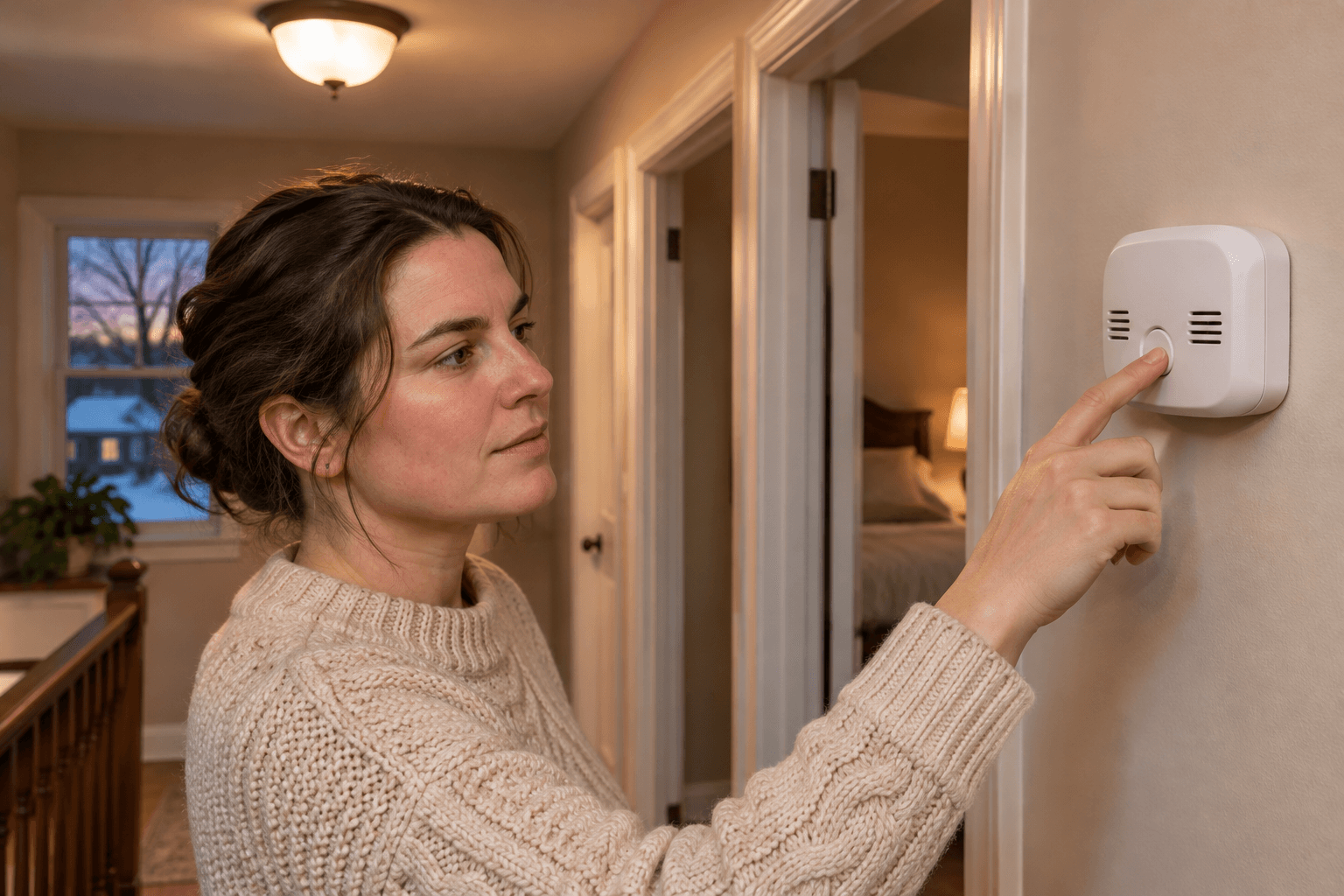
The Ontario government advises testing carbon monoxide alarms monthly with the test button and replacing the batteries every year. Replace the alarm itself according to the manufacturer's instructions. Ontario's guidance ties replacement to the manufacturer's instructions, so the maker's interval is the one that counts.
• Count your storeys, including the basement, and confirm each has an alarm.
• Check each sleeping area has an alarm adjacent to it.
• Press the test button on every alarm.
• Read the manufacture date on the back and compare it with the maker's replacement interval.
• Book the annual inspection of your furnace, chimney and vents before the cold weather.
Why does an annual furnace inspection matter for carbon monoxide in Ontario?
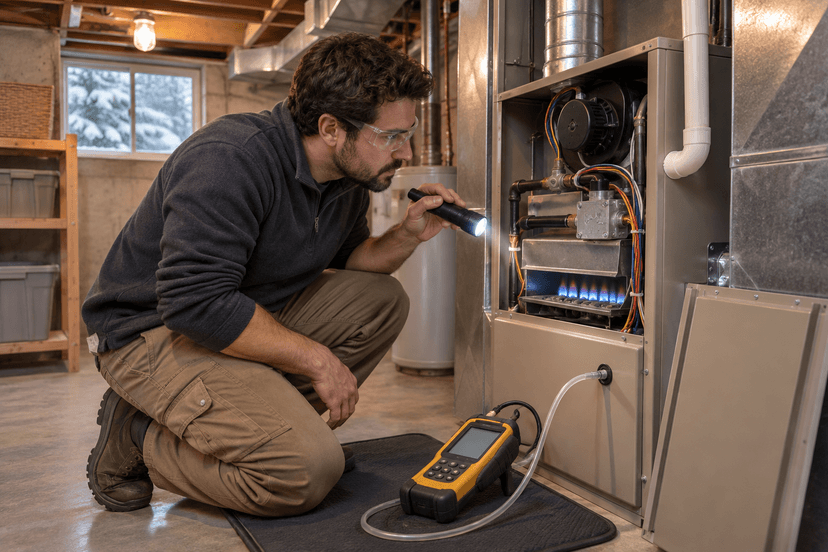
An annual furnace inspection matters because a carbon monoxide alarm only tells you when gas is already in the house. Ontario's carbon monoxide safety page advises that fuel-burning appliances, chimneys and vents be "cleaned and inspected by professionals every year before cold weather sets in." The inspection is how the problem gets caught before the alarm ever sounds.
If the inspection turns up a cracked part or a failing furnace, our furnace repair cost guide and furnace replacement cost guide break down what each path costs. Buying a home? Ask your inspector to note every fuel-burning appliance and alarm location; our home inspection cost guide explains what an inspection covers.
What should you do if your carbon monoxide alarm goes off in Ontario?
If your carbon monoxide alarm sounds, get everyone out of the home immediately, then call 9-1-1 or your local emergency number from outside. Ontario's guidance is explicit that leaving comes first. Symptoms of carbon monoxide exposure include headaches, nausea, dizziness, confusion and drowsiness, and exposure can cause loss of consciousness and death.
Do not press the hush button and go back to bed. Leave, call from outside, and let the fire department clear the home before anyone goes back in.
TaskRight is a verified, zero-commission home services platform in Canada. Post your furnace inspection or tune-up job once, mention any fuel-burning appliances and your alarm setup, and compare quotes from local HVAC pros. Every pro on TaskRight is verified by our team over the phone before they can quote. They keep 100% of every job and pay no per-lead fee, so nothing is priced back into your number.
👉 Book a furnace inspection with a Toronto HVAC pro →
Frequently asked questions about carbon monoxide alarms in Ontario
What are the new carbon monoxide alarm rules in Ontario?
Since January 1, 2026, the Ontario Fire Code requires carbon monoxide alarms on every storey of an existing home, including storeys without bedrooms, in addition to an alarm adjacent to each sleeping area. The rule applies to homes with a fuel-burning appliance, a fireplace or an attached garage, or heating air from an appliance outside the home.
Where are carbon monoxide alarms required in an Ontario home?
Carbon monoxide alarms in an Ontario home are required adjacent to each sleeping area and on every storey of the home, including storeys with no bedrooms. The Office of the Fire Marshal advises following the manufacturer's instructions for the exact mounting height and position, and contacting your local fire department with questions about a specific layout.
How many carbon monoxide detectors do you need in Ontario?
An Ontario home needs at least one carbon monoxide detector on every storey, and one adjacent to each sleeping area (a single hallway alarm can count for both). The Fire Code sets required locations rather than a fixed number, so a house with bedrooms on two floors needs more alarms than one with all bedrooms off a single upstairs hallway.
Who is responsible for carbon monoxide alarms in an Ontario rental?
In an Ontario rental home, the landlord is responsible for complying with the carbon monoxide alarm requirements in the Fire Code. In an owner-occupied home, the homeowner is responsible. Ontario law also makes it illegal for anyone, including a tenant, to remove the batteries from a carbon monoxide alarm or tamper with it.
Do I need a carbon monoxide detector in Ontario if I have an attached garage?
Yes. An Ontario home with an attached garage falls under the Fire Code's carbon monoxide alarm rules even if it has no fuel-burning appliance or fireplace. Since January 1, 2026, that home needs an alarm adjacent to each sleeping area and on every storey, including storeys without bedrooms.
Last updated: November 2026. Requirements are taken from the Ontario government's fact sheet Carbon Monoxide Alarm Rules: Existing Homes (December 17, 2025), which summarises Section 2.16 of Division B of the Ontario Fire Code, O. Reg. 213/07. Safety advice is taken from the Government of Ontario's carbon monoxide safety page (updated December 30, 2025). For a specific home, contact your local fire department.
Related reading:
Furnace Repair Cost in Canada — what the common furnace faults cost to fix.
Home Inspection Cost in Canada — what an inspection covers before you buy.
Furnace Replacement Cost in Canada — when replacing beats repairing.
HVAC contractors in Toronto — post your job with no lead fees.